The most significant shift in retail behavior over the past few years has been the continued rise of online marketplaces. With strong customer experience, trusted payments, and vast assortments, it’s no surprise that European fashion marketplaces have flourished alongside this growth.
That growth is expected to continue; Forrester projects global online retail sales will reach US$6.8 trillion by 2028, highlighting the scale of the opportunity for brands that get their marketplace strategy right.
However, this growth and opportunity come with fresh challenges for fashion brands. Pressure on profitability remains, driven by cost volatility, fierce competition, and increasingly value-conscious consumers. Reflecting this environment, McKinsey projects the global fashion industry will again deliver low single-digit growth in 2026, making strategic decisions (such as which fashion marketplaces to sell on) even more critical.
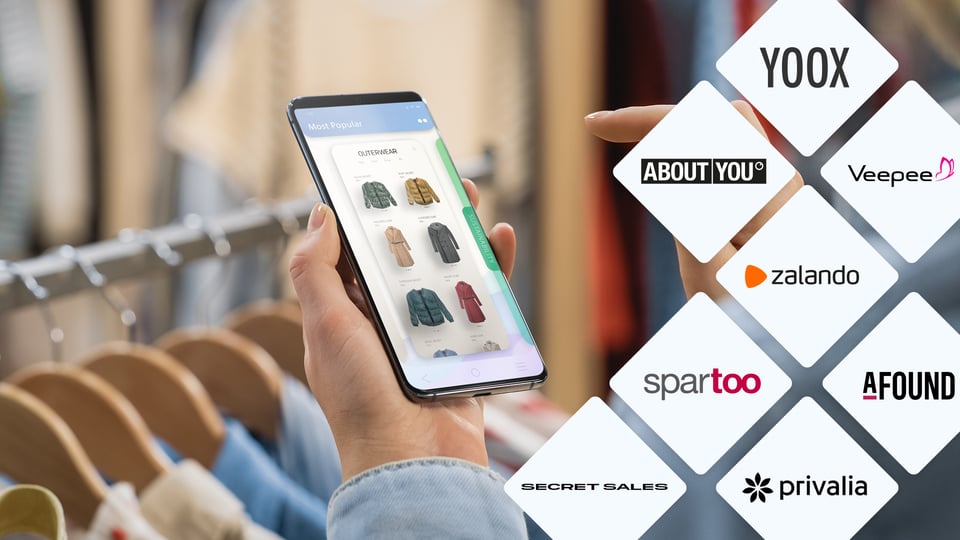
With that in mind, here are some of the European fashion marketplaces to watch in 2026. This list isn't exhaustive, and we strongly believe each marketplace needs to be considered within your overall strategy — but hopefully, it will provide inspiration and new ideas of where to play.
We've grouped them into 4 distinct categories — European fashion powerhouses, Up-and-coming fashion marketplaces, Off-price, and Horizontal — so wherever your business sits, there'll be something in this article for you.
European fashion powerhouses
Going global is easier than ever for forward-thinking fashion brands. To make your expansion a success, you should leverage the existing engaged audiences of European marketplaces.
If you're an Asia-Pacific or American brand, Europe remains an attractive next frontier. With the EU single market supporting the free movement of goods, services, people, and capital, expanding into one EU country can help you build reach across all 27 member states, many of which represent some of the wealthiest consumer markets in the world.
The European Union alone represents a huge customer opportunity. Eurostat reports that the EU population reached around 450 million people as of 1 January 2025, showing how large the market remains for cross-border ecommerce expansion.
Add the purchasing power of the United Kingdom, one of Europe’s most mature ecommerce markets, and the opportunity becomes even more compelling for brands ready to scale internationally. Are you a well-established European brand, or do you already have a foothold in Europe? Expanding into new fashion marketplaces in neighboring EU countries can help you reach new customers, diversify revenue streams, and drive growth online.
Here are Europe's fashion marketplaces that demand serious consideration in 2026:
1. Zalando
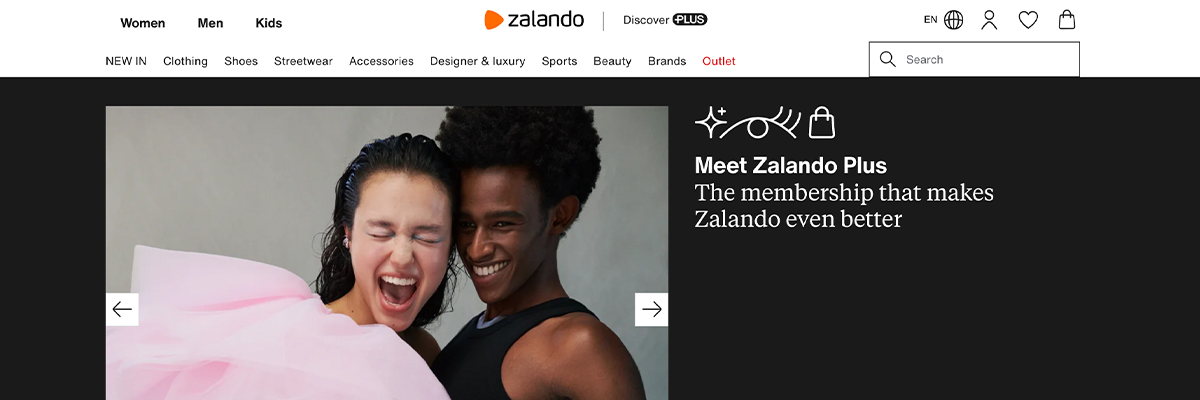
With a GMV of €15.3 billion in 2024, Zalando remains a European fashion marketplace powerhouse. Selling on the marketplace means access to a highly engaged customer base and a broad multi-market footprint, supported by a wide range of trading tools and customer insights designed to help brands scale. Zalando reached 51.8 million active customers and processed 251 million orders. Customers continue to order frequently, with an average of 4.8 orders per active customer over the last twelve months. Zalando can also support merchants with fulfillment through ZFS (Zalando Fulfillment Solutions) and a comprehensive partner program for retailers and brands.
Note: Zalando is currently invite-only, and onboarding depends on factors such as assortment, brand fit, and operational readiness.
ChannelEngine - the integration provider for Nelson Shoes on Zalando
Until last year, brands added the stock to Zalando by uploading bulk files via EDI (electronic data interchange). With the arrival of zDirect, a new API (application programming interface), this can now be done automatically and in real-time. ChannelEngine is the first marketplace integrator being able to also link multi-brand retailers to Zalando via this API, as seen on Nelson Shoes.
Nelson Shoes is live on the Zalando marketplace, Europe’s largest online platform for fashion and lifestyle. The retailer became the first Dutch multi-brand retailer to join Zalando’s Partner Program, with the majority of its products going through Zalando in the Netherlands and broader European expansion underway.
Why ChannelEngine?
Because we have built the leading ecommerce infrastructure, letting our clients use their store or back-end system to sell to everyone around the world. By creating a seamless integration between businesses and marketplaces, we empower companies to automate and maximize their sales potential internationally.
We connect partners to Zalando zDirect, the merchant platform portal for non-programmers. It includes different tools like the Product Status Report (PSR), which provides a snapshot of the product status in Zalando’s system. For retailers who stock their products with Zalando, ChannelEngine can also support integrations with ZFS (Zalando Fulfillment Solutions).
Now also: Unified marketplace + logistics with ZEOS
To help fashion and lifestyle brands scale even faster across Europe, ChannelEngine has partnered with ZEOS, Zalando’s B2B unit, combining our marketplace connectivity with ZEOS’s pan-European logistics network. This collaboration gives brands a more connected setup across channels by enabling them to manage marketplace expansion and fulfillment in one streamlined approach.
ChannelEngine has built an integration with ZEOS using their new API connection, giving brands seamless access to ZEOS logistics capabilities directly through ChannelEngine’s platform. This is a major step forward in simplifying multi-channel operations and accelerating European growth.
As Volker Bergner, VP at ZEOS, explains: "At ZEOS, we believe that being where shoppers buy across European marketplaces and a brand’s own ecommerce and delivering orders and returns in a way that delights them is key to driving conversion, repurchase, and loyalty. Our partnership with ChannelEngine is another step in building the connected ecosystem that helps fashion and lifestyle brands grow smarter and more profitably across Europe."
2. ABOUT YOU
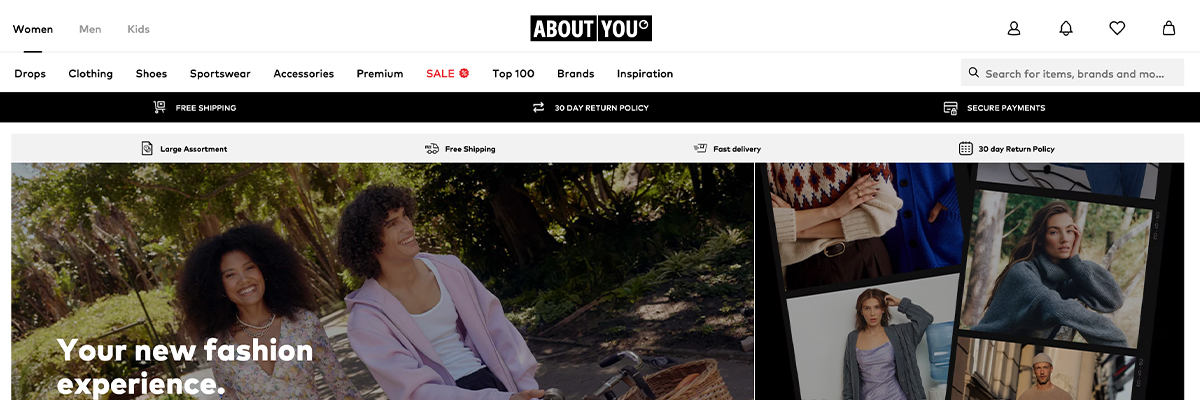
ABOUT YOU is a next-generation digital platform to watch. The company aims to digitize the experience of a shopping stroll, with a strong focus on personalization and engaging content. In FY 2024/2025, ABOUT YOU reported over €2.0 billion in revenue (€2,001.7 million) and grew revenue by 3.4% year-on-year, while increasing its active customers (LTM) to 12.9 million.
The platform continues to stand out for its young, digital-first audience and its ability to blend commerce with content, including influencer and celebrity-led collections. In a crowded market, ABOUT YOU’s emphasis on personalization helps cut through the noise, while its growing focus on more responsible retail supports long-term relevance. Sustainability remains central to the fashion agenda, and consumers continue to expect more transparency and accountability from brands.
3. Spartoo
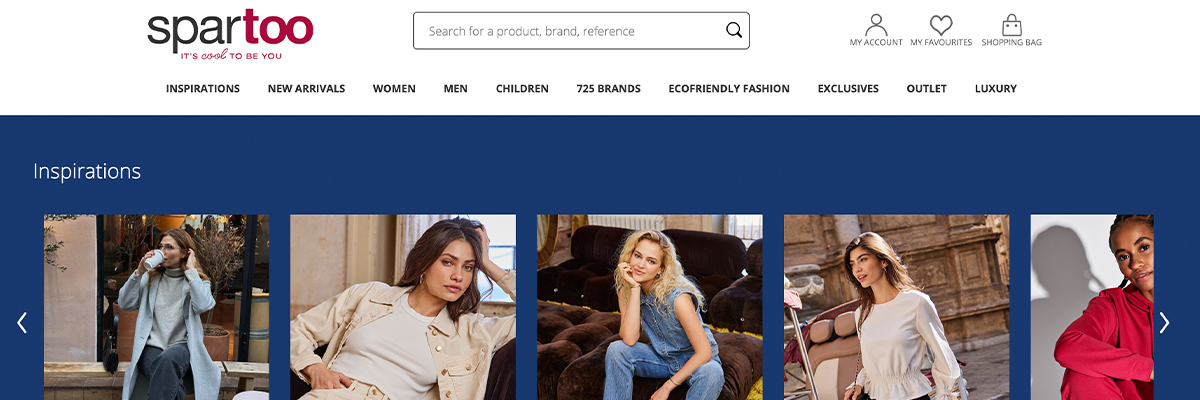
Spartoo is a long-established European fashion marketplace with a broad footprint across multiple countries. While it’s best known for footwear, it has evolved into a wider fashion destination, offering a strong opportunity for brands looking to reach a diverse European audience.
Their multi-country presence makes them a good option for scaling beyond a single home market, particularly for brands with strong product-market fit in footwear and apparel basics. Spartoo also supports brands with localized storefront experiences across key European markets, helping merchants reach shoppers in their preferred language and currency. For sellers looking to expand efficiently, Spartoo can be a practical route into multiple European countries without the operational complexity of building local ecommerce sites in each market.
4. La Redoute
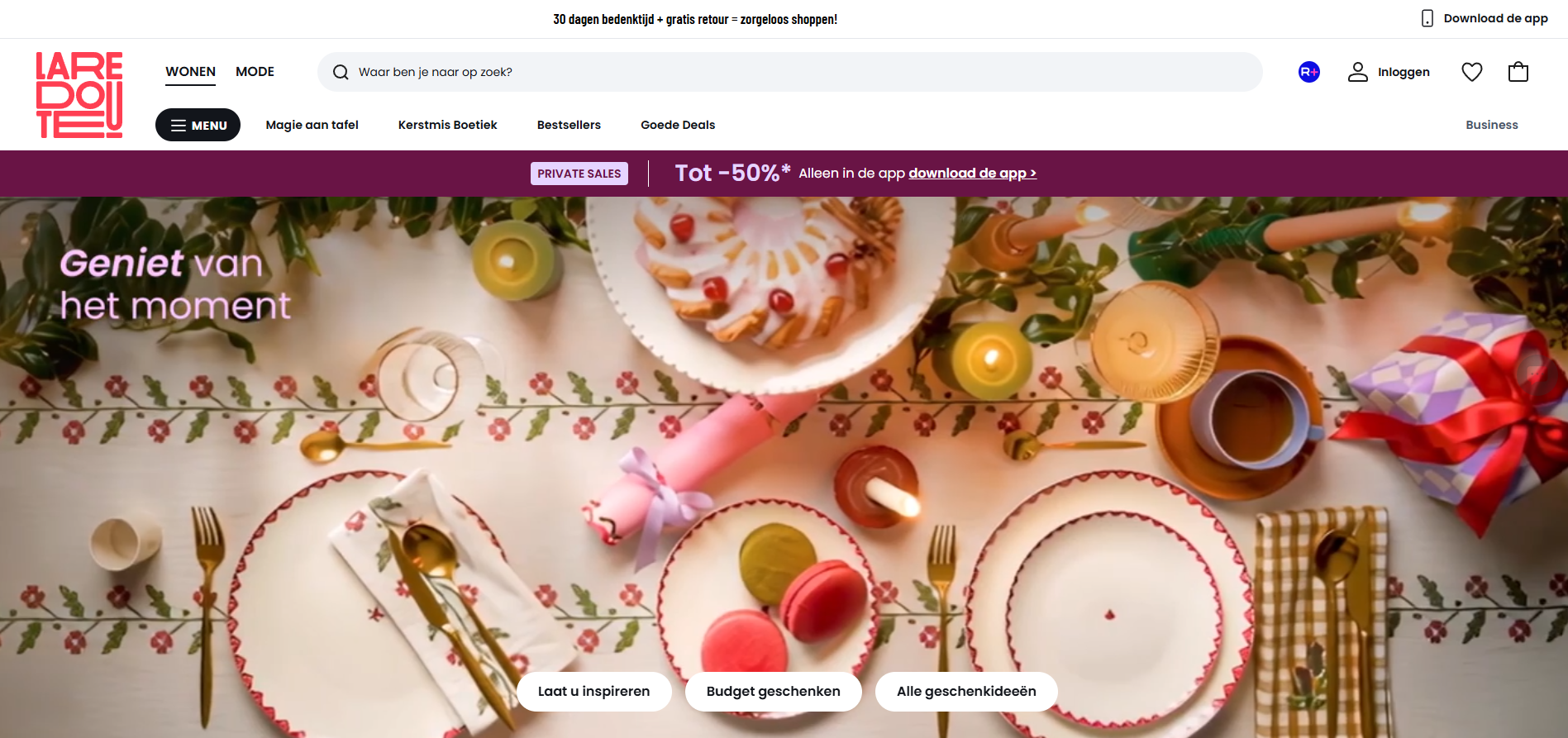
La Redoute is a well-known European destination that combines fashion heritage with strong local consumer trust, particularly in key Western European markets. For fashion brands, it offers:
- a large, loyal customer base
- strong visibility for apparel categories
- a platform that blends fashion and lifestyle shopping behavior
It is a great example of a marketplace where familiarity and brand reputation play a major role in conversion.
5. John Lewis
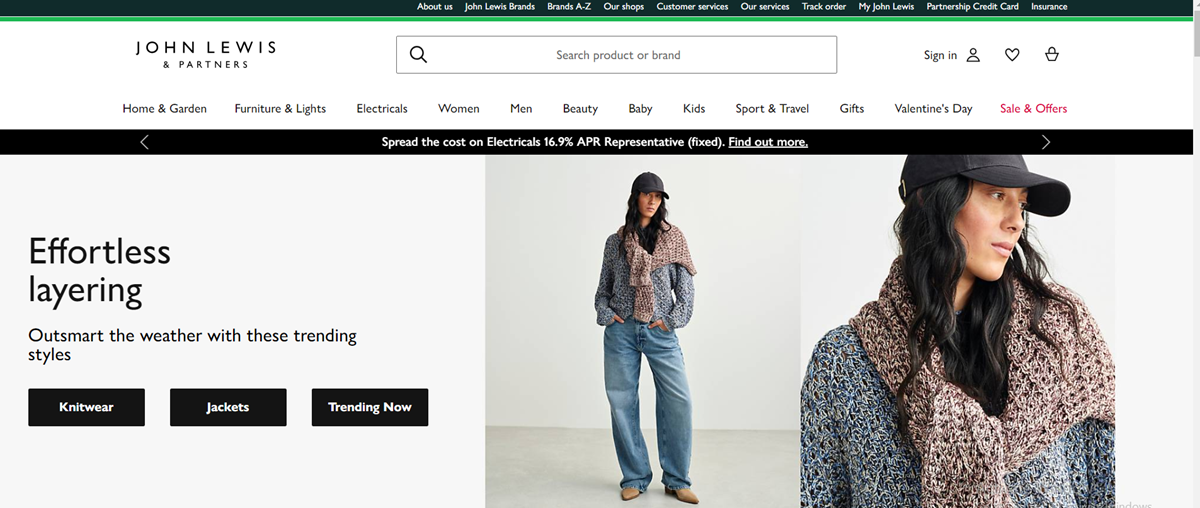
John Lewis remains one of the most trusted retail brands in the UK and has strong relevance for fashion brands looking to grow in a premium, quality-led environment.
While it operates across multiple categories, fashion plays a major role in its customer proposition. For brands seeking UK growth, especially those targeting high-intent shoppers who value reliability and service, John Lewis is worth serious consideration. It’s also a strong example of how UK shopping behavior is shaped by trusted retail destinations, alongside the top marketplaces in the UK.
Up-and-coming fashion marketplaces
One thing we know for sure: ecommerce moves fast. And there are few verticals faster than fashion. New marketplaces are constantly entering the game to capitalize on the opportunity and offer consumers the seamless purchasing experiences they’re looking for. Here are two fashion-focused newcomers to watch.
1. Secret Sales
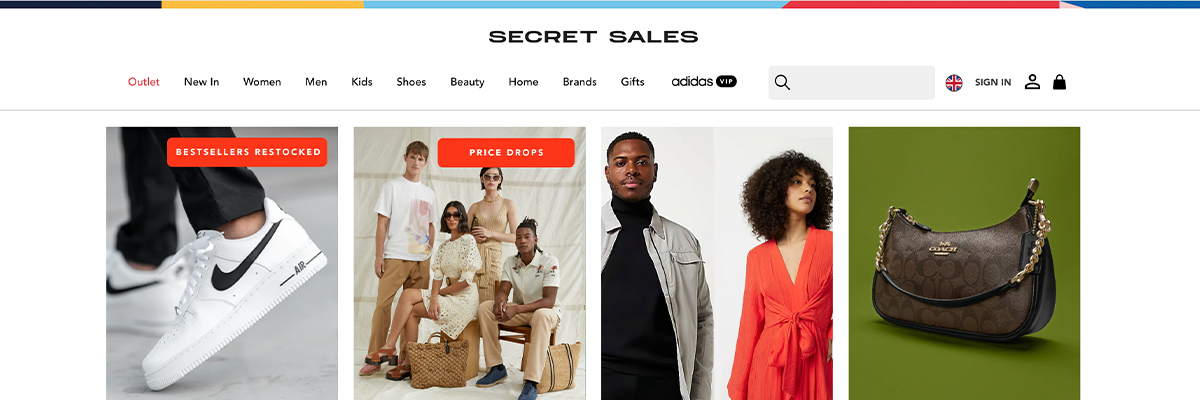
Secret Sales, while not strictly a newcomer, continues to make strategic moves as it expands across Europe and strengthens its position in off-price fashion. In 2025, the marketplace acquired Dutch retailers V&D (Vroom & Dreesmann) and To Be Dressed, a move designed to deepen its footprint in the Benelux region and accelerate its pan-European growth.
It remains an elegant solution to the perennial problem of overstock. Secret Sales enables brands to sell non-full-price inventory through a controlled, brand-safe environment that protects positioning while improving sell-through. As CEO Chris Griffin has described it, the model provides a “clean and profitable exit strategy” for selling non-full-price inventory in a more sustainable way. Using a shop-in-shop approach, Secret Sales set out to build a digital equivalent to designer outlet destinations, creating a more structured and brand-friendly route to discounting.
2. Vertbaudet
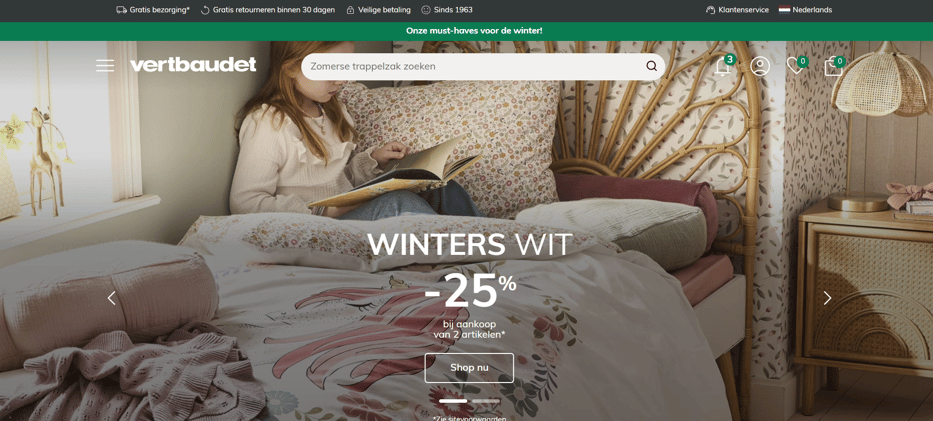
Vertbaudet is a category specialist with strong positioning in kidswear, maternity, and family-oriented fashion. For brands with relevant assortments, this type of specialist platform can offer higher intent shoppers and stronger conversion than broader marketplaces, particularly when customers are searching for specific product types, sizing, and functional apparel needs.
Vertbaudet also benefits from strong customer loyalty and repeat purchasing, as families return season after season for essentials and growth-driven wardrobe updates. For brands selling children's wear, basics, outerwear, or occasionwear, it can be a highly relevant channel to reach an audience with clear buying intent.
Off-price
Discounting and off-price marketplaces such as Secret Sales are becoming a key strategy as the fashion industry faces a growing awareness of sustainability issues. By selling off overstock on separate discount destinations, brands can avoid some of the pitfalls of consumer culture — like burning billions of dollars of stock. As consumers demand more transparency and ethical accountability, off-price markets are the ones to watch.
1. Veepee
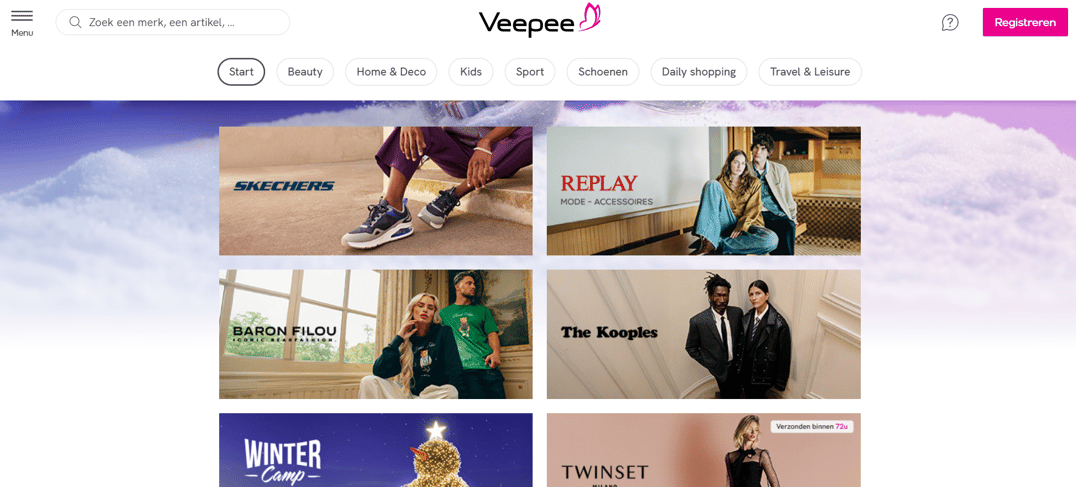
Veepee (formerly Vente-Privee) is a leading European online flash-sales platform, offering limited-time sales that typically run for a few days and feature major brands at significant discounts. This model makes Veepee particularly attractive for fashion brands looking to manage end-of-season stock and overstock without relying solely on public markdowns. In recent years, Veepee has continued to build out its marketplace model through Brandsplace, its curated marketplace offering. Brandsplace has become an increasingly important growth lever for the group, with reported global growth of 15% in 2024.
Veepee operates across multiple key European markets, and the group continues to scale its presence while investing in marketplace-led growth strategies. In 2024, Veepee reported €3.3 billion in revenue, demonstrating continued momentum in a competitive ecommerce landscape. For fashion brands, Veepee remains a strong off-price channel to handle overstock and seasonality at scale, while benefitting from a platform designed around urgency, discovery, and conversion.
2. BestSecret

BestSecret has become one of Europe’s most notable members-only off-price fashion destinations, offering premium and lifestyle brands a way to sell discounted inventory in a controlled environment. It’s particularly relevant in 2026 for brands looking for:
- brand-safe discounting
- a closed, membership-based audience
- high volume potential without heavy public markdown exposure
Horizontal marketplaces
There's no getting away from the power of one-stop-shop destinations. The familiarity of the interface and the convenience of getting everything they need at once provide a great experience for consumers. Here are 2 horizontal marketplaces to watch that sell multiple categories for fashion brands.
1. Amazon
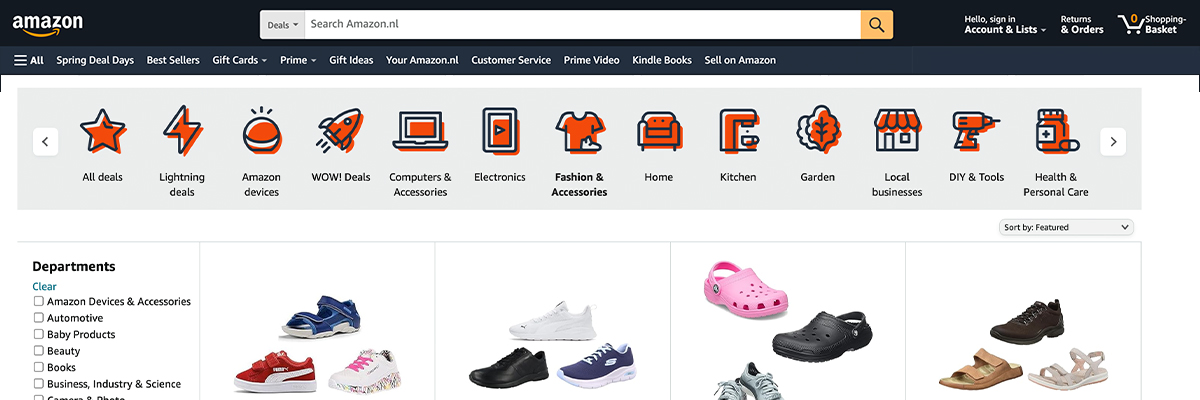
Amazon continues to double down on fashion, investing in tools that make apparel discovery and fit more seamless online. While the company has experimented with physical retail, its biggest impact in fashion comes from its marketplace scale and its ability to use data, delivery speed, and personalization to drive conversion and repeat purchases.
Amazon has become one of the most influential players in the fashion sector, particularly in the U.S., where it has been reported as the largest clothing retailer, surpassing Walmart in apparel share. They have also been improving the fashion shopping experience through AI-driven features such as virtual try-on and size recommendation tools, while phasing out older initiatives like Try Before You Buy in favor of more scalable digital solutions. For European brands looking to expand, Amazon continues to offer structured onboarding and resources to help sellers launch and grow across its European marketplaces.
Looking ahead, Amazon is also well positioned for the rise of agentic commerce, where AI assistants increasingly help shoppers discover products, compare options, and complete purchases with less manual search. In that environment, product content quality becomes even more critical. Brands that invest in rich attributes, accurate sizing, strong imagery, and clear differentiation are more likely to win visibility and conversion as shopping becomes more AI-driven and intent-led.
2. Bol
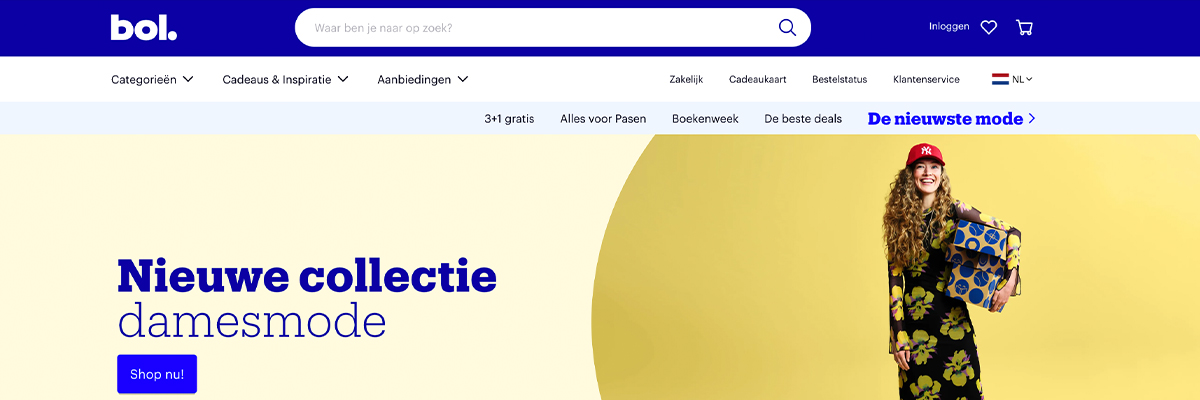
Netherlands-based Bol. remains one of the most important marketplaces in the Benelux region and is a platform to watch as it continues to expand its reach. Since launching its French-language proposition, Bol. has strengthened its position as a cross-border destination for Dutch- and French-speaking shoppers, making it an increasingly relevant channel for brands looking to scale across the region.
For fashion brands, Bol. is a strong local partner in a high-trust market with growing potential. In recent years, the marketplace has also made clear improvements to the fashion shopping experience, including better browsing and filtering for key attributes like sizes, fit, and color, helping fashion categories become easier to discover and buy.
3. Debenhams
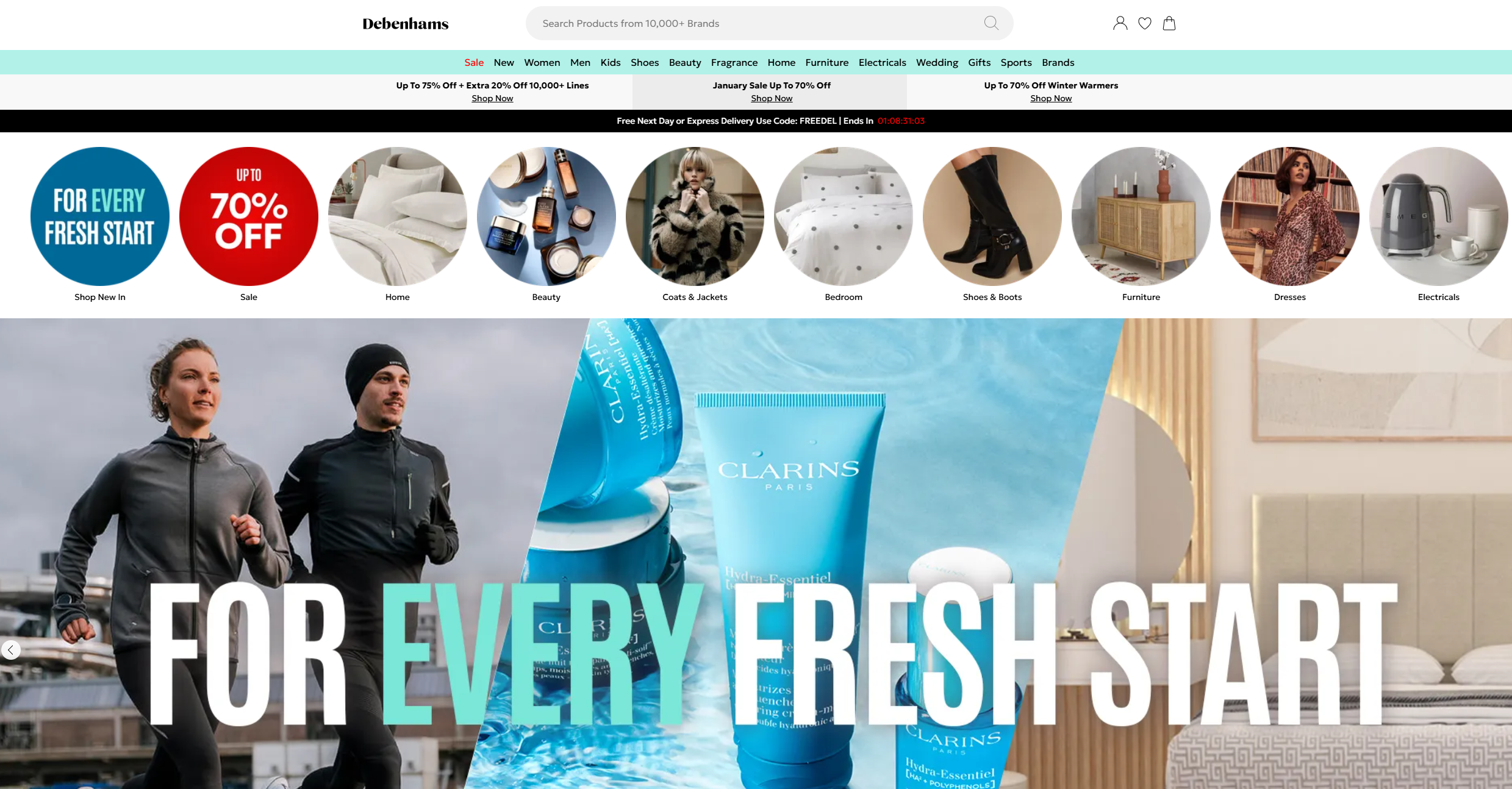
Debenhams has evolved into a modern marketplace model spanning multiple categories, with fashion and beauty continuing to play a central role. The platform combines the recognition of a long-established department store brand with the flexibility of a marketplace model, enabling a broader selection across price points and styles. For shoppers, it offers a familiar destination for fashion discovery, while giving brands the opportunity to benefit from existing trust and strong UK brand awareness.
For fashion brands, it can be an interesting option for UK market access and category reach, particularly when you’re looking for an alternative to the biggest platforms while still accessing a familiar retail destination.
Ready to scale your fashion business on marketplaces?
There are plenty more marketplaces that can help your fashion brand grow online. To choose the right ones, you’ll need to clarify your goals, understand your customers, evaluate commercial potential, and plan the operational side, from product data and pricing to fulfillment and returns.
That can feel complex, but you don’t have to do it alone. ChannelEngine helps fashion brands connect to leading marketplaces across Europe and beyond, and manage everything from one central platform. With a single integration to your back-end systems, you can automate product listings, inventory syncing, pricing, orders, and returns, while maintaining full control of your assortment and brand experience across channels.
We can help you identify the marketplaces that best match your goals, assess your readiness, and build a clear roadmap to scale profitably in 2026.