What is D2C? Everything you need to know about direct to consumer ecommerce
D2C vs B2C: what's the difference?
These two terms are easy to confuse.
B2C (business-to-consumer) describes any business that sells to end consumers. That includes supermarkets, fashion retailers, electronics stores - businesses that may source their products from many different manufacturers and brands.
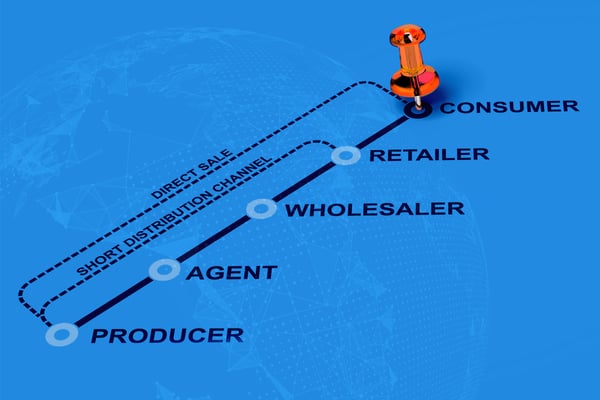
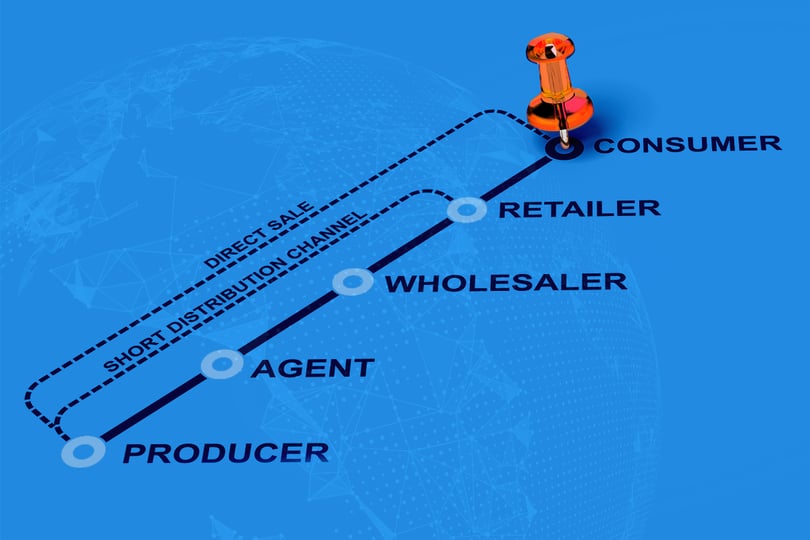
D2C is a specific type of B2C. The distinction is that in D2C, the manufacturer is the seller. The brand makes the product and sells it directly, cutting out any intermediary.
| B2C | D2C | |
|---|---|---|
| Sells to end consumers | ✅ | ✅ |
| Owns and manufactures the product | ❌ (usually) | ✅ |
| Controls pricing and brand experience | ❌ (shared) | ✅ |
| Owns first-party customer data | ❌ (partial) | ✅ |
| Sells through own channels | Sometimes | Always |
A traditional retailer like a department store is B2C. A mattress brand that sells exclusively through its own website is D2C. And a consumer goods company that sells wholesale and runs its own online store is doing both - which is increasingly common.
D2C vs B2B: when manufacturers go direct
Many manufacturers traditionally operated in B2B mode: producing goods and selling them wholesale to retailers who handled the customer-facing side. D2C represents a fundamental shift in that model.
In a B2B wholesale model, the manufacturer:
- Sells in bulk at discounted rates
- Hands over brand control to the retailer
- Has no direct relationship with the end consumer
- Receives no first-party customer data
In a D2C model, that same manufacturer:
- Captures the full retail margin
- Controls pricing, presentation, and experience
- Builds direct relationships with customers
- Collects first-party data it can use to improve products and marketing
Most established manufacturers don't abandon their wholesale channels when going D2C - they run both in parallel. The D2C channel complements retail partnerships rather than replacing them, letting brands reach new audiences and learn directly from customers without alienating existing retail partners.
Why D2C is growing so fast
D2C is not a new concept - mail-order catalogues were an early form of it - but digital commerce has made it viable at scale for almost any brand.
In the US, D2C ecommerce reached $239.75 billion in 2025, now accounting for 19.2% of total retail ecommerce - and the global D2C market is projected to grow from approximately $163 billion in 2024 to nearly $595 billion by 2033.
North America leads, but Europe is catching up fast: D2C brands now account for approximately 12-15% of total European ecommerce, up from under 7% in 2019, and 50% of top European D2C brands grew revenue by at least 20% by owning their sales channel entirely. Asia-Pacific is the fastest-growing region of all - driven by rapid digital transformation, sustainability-conscious consumers, and a surge in social commerce adoption.
Several forces are accelerating this growth:
-
The pandemic reset buyer behaviour. COVID forced consumers online and forced brands to rethink distribution. D2C channels gave brands a lifeline when retail shelves went dark - and the habits consumers developed stuck.
-
Third-party data is disappearing. With cookie deprecation and privacy regulation tightening, brands that rely on retail partners for audience data are increasingly flying blind. First-party data - the kind only D2C gives you - has become a strategic asset.
-
Social commerce lowered the barrier to entry. Platforms like Instagram, TikTok, and Pinterest have made it possible for brands to build audiences and drive sales without massive marketing budgets. D2C and social commerce are deeply linked.
-
Consumer expectations shifted. Today's buyers expect brand experiences that feel personal, not generic. D2C is the only model where brands can truly deliver that at every touchpoint.
Why consumers choose to buy direct
Nearly two-thirds of consumers worldwide now buy directly from brands - up 15% in three years. In the US, the number of D2C shoppers is set to reach 111 million, representing around 40% of the population. According to Statista, the top factors motivating shoppers worldwide to buy directly from brands are:
- Better price (56%) - cutting out the middleman often means better value
- Free delivery (49%) - an expectation that has become near-universal
- Fast and convenient delivery (40%) - speed matters as much as cost
- Free returns (37%) - removing the friction from trying something new
- Loyalty programmes (27%) - rewards that retailers can't replicate
- Exclusive products (26%) - items only available through the brand itself
Beyond price and logistics, consumers also value the experience. Buying direct means dealing with the people who actually made the product - often a more knowledgeable, more invested customer service experience. And for mission-driven brands, buying direct feels like a more authentic expression of support.
The benefits of D2C selling
✅Control over pricing and margins
Retailers and marketplace operators take a cut. In a pure wholesale model, manufacturers often sell at 30–60% discounts off the retail price. Going D2C means capturing that full margin - the entire gap between your cost of goods and what the consumer pays.
It also gives you complete pricing flexibility: run promotions on your terms, not your retailer's promotional calendar.
✅First-party data ownership
When you sell through retailers, the customer data stays with the retailer. They know who bought what, when, and at what price - you don't. In D2C, all of that flows directly to you.
With first-party data, you can identify your highest-value customers, personalise marketing at scale, improve product development based on real behaviour, and reduce customer acquisition costs over time. As third-party data becomes scarcer, this is increasingly where competitive advantage lives.
✅Full brand control
From the first ad impression to the unboxing moment, D2C brands own the entire experience. How the product is photographed, how it's described, how it arrives, how customer service handles an issue - all of it reflects directly on your brand. When you sell through retailers, you give up much of that control the moment the product leaves your warehouse.
✅Faster product testing and iteration
In a wholesale model, retailers are often reluctant to stock untested products. D2C lets you launch new products to a small audience, gather real feedback quickly, and iterate before committing to large production runs. It compresses the loop between idea and insight.
✅Direct customer relationships and loyalty
Repeat customers are the most profitable. D2C makes it possible to build genuine relationships: loyalty programmes, personalised birthday offers, handwritten notes, exclusive early access. None of this is possible when a retailer sits between you and your customer.
The challenges of D2C selling
❗Customer acquisition
Retailers come with built-in foot traffic and search visibility. Going D2C means building your audience from scratch - paid media, SEO, social, influencer marketing, all of it. Customer acquisition costs can be high, especially early on, and brands without a clear differentiated story struggle to cut through.
❗Fulfilment and logistics
Shipping one item to one consumer is operationally very different from shipping pallets to a distribution centre. D2C brands need reliable pick-pack-ship operations, returns management, and the logistics network to deliver the next-day or same-day experiences customers now expect. Getting this wrong is expensive and brand-damaging.
❗Technology complexity
A D2C operation requires a connected stack: ecommerce platform, marketplace integrations, inventory management, CRM, marketing automation, analytics. Keeping all of these in sync is genuinely complex, especially as you scale across multiple channels and geographies.
❗Building trust at scale
A new D2C brand doesn't have the trust signals that an established retailer provides. Reviews, social proof, press coverage, and consistent service are all critical - but they take time to build.
Types of D2C selling models
D2C is not one-size-fits-all. Most successful brands combine several approaches:
Pure-play digital - selling exclusively through owned digital channels (website, app, social stores). Maximum brand control, but limits reach to audiences you can acquire directly.
Marketplace D2C - selling directly on marketplaces like Amazon, Zalando, or Bol.com as a first-party seller. You benefit from the marketplace's existing traffic while retaining control over your product listings, pricing, and customer communications. This is increasingly a core part of D2C strategy.
Omnichannel D2C - combining owned digital channels with physical retail (your own stores or pop-ups), creating multiple touchpoints for discovery and purchase. Nike's owned stores and website sit alongside its wholesale distribution.
Social commerce - selling directly through social platforms like Instagram Shopping or TikTok Shop, meeting customers at the point of discovery.
Hybrid D2C + wholesale - running D2C channels in parallel with retail partnerships. The D2C channel drives margin and data; the retail channel drives volume and reach.
Real-world D2C brand success story
![]()
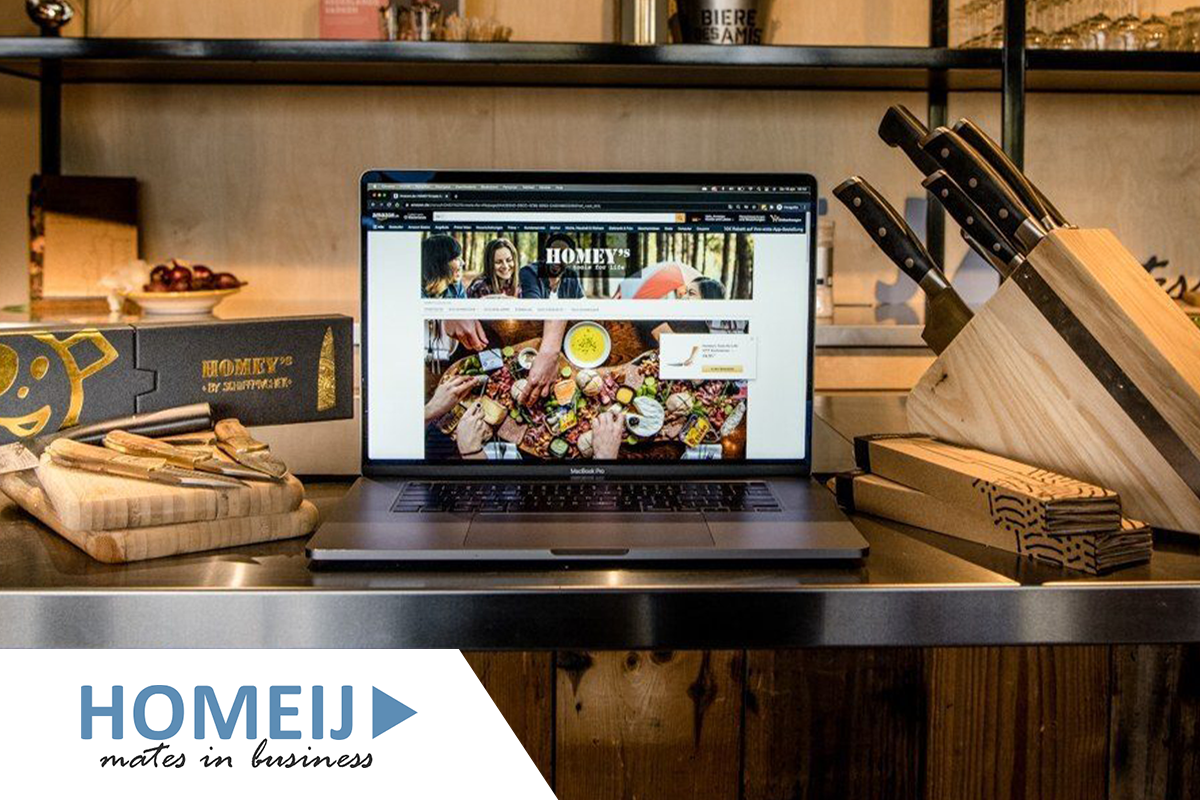
ChannelEngine has helped a number of global brands enhance their D2C selling strategy. One prime example of this is Homeij’s D2C branch, Sharp as a Knife. Specializing in high-quality kitchenware and outdoor living accessories, the brand sought to expand into new markets and grow overall sales.
By using ChannelEngine’s streamlined marketplace integration solution, Sharp as a Knife was able to scale into brand-new geographical markets efficiently, as well as increase visibility in the regions the brand was already established in.
By expanding the brand’s D2C model across these new marketplaces, Sharp as a Knife’s revenue increased by approximately 350% year-on-year, with the brand’s Knives and Knife Blocks segment experiencing an exceptional 1150% growth in sales.
How to build a D2C strategy
- 1. Define your D2C purpose. Why are you going direct? Margin improvement, data ownership, brand control, product testing? The answer shapes your channel mix, investment priorities, and success metrics. Don't go D2C just because it's fashionable - go D2C because it solves a real business problem.
- 2. Know your customer deeply. Every D2C decision - channel selection, pricing, fulfilment, marketing - should be grounded in a clear understanding of who you're selling to, where they spend time online, what drives their purchase decisions, and how they want to be communicated with.
- 3. Build owned channels before you need them. Your website and CRM are the foundation. Even if you start selling primarily on marketplaces, building your own direct channel early means you're not entirely dependent on third-party platforms as you scale.
- 4. Integrate the right marketplaces. Marketplaces accelerate reach. Adding Amazon, Zalando, or regional platforms relevant to your market gives you access to millions of buyers without needing to build that traffic from scratch. The key is managing your presence consistently - product data, pricing, fulfilment - across all of them.
- 5. Invest in fulfilment from day one. Logistics is where D2C wins or loses. Define your fulfilment model early: do you fulfil in-house, use a 3PL, or rely on marketplace fulfilment services like FBA? Map out your returns process before you launch.
- 6. Treat data as a product. First-party data is one of D2C's greatest advantages - but only if you use it. Set up tracking, invest in a CRM, and build processes to turn customer behaviour into product and marketing decisions from the start.
- 7. Supplement with social commerce. Social platforms are increasingly shoppable. A D2C brand that ignores Instagram, TikTok, or Pinterest is missing a channel where purchase intent and discovery happen simultaneously.
How ChannelEngine supports D2C brands
Scaling a D2C operation across multiple markets and channels is operationally demanding. ChannelEngine connects brands to 950+ global marketplaces and sales channels from a single platform - managing product feeds, orders, pricing, and fulfilment in one place.
For D2C brands, that means:
- Marketplace expansion without the operational overhead - launch on Amazon, Zalando, Bol.com, and dozens of other platforms without duplicating your team's effort
- Consistent product data at scale - keep listings accurate and optimised across every channel automatically
- Centralised order management - route and fulfil orders from any channel through your preferred logistics setup
- Social commerce integration - connect your product catalogue to Instagram, TikTok, and other social selling platforms
- Marketplace expertise - ChannelEngine's team advises brands on channel strategy, including which marketplaces fit their category and geography
Sharp as a Knife grew revenue by 350% year-on-year after using ChannelEngine to expand its D2C presence across new European markets.
Whether you're just starting out with D2C or looking to expand into new markets and marketplaces, our team is here to help. Use this guide as a starting point to review your strategy. Then reach out for a platform tour or a session on building your direct-to-consumer channel mix.
Request a free D2C strategy consultation today →
FAQs about D2C selling
What does D2C stand for? D2C stands for direct-to-consumer. It describes a business model where a brand sells its own products directly to the end buyer, without using retailers, distributors, or other intermediaries.
Is D2C the same as DTC? Yes - D2C and DTC (direct to consumer) are used interchangeably. DTC is more common in North American markets; D2C is the prevalent abbreviation in European markets.
What's the difference between D2C and B2C? B2C (business-to-consumer) is a broad category that includes any business selling to end consumers. D2C is a specific type of B2C where the manufacturer is also the seller. A D2C brand always sells its own products; a B2C business might sell products from many different manufacturers.
Can a brand do both D2C and wholesale? Yes - and most do. Running D2C channels alongside wholesale or retail distribution is increasingly common. The D2C channel typically delivers higher margins and richer data, while wholesale delivers volume and reach. The two models complement each other.
What are the most common D2C channels? Owned ecommerce websites, brand apps, marketplace listings (where the brand is the first-party seller), and social commerce platforms (Instagram Shopping, TikTok Shop).
What technology does a D2C brand need? At minimum: an ecommerce platform, order management system, inventory management, and CRM. As you scale to multiple marketplaces, a channel management platform like ChannelEngine centralises operations and prevents the complexity from multiplying.
Is D2C worth it for small brands? Yes - in fact, D2C is often a better starting point for small brands than trying to get stocked by retailers. The lower barriers to entry (a Shopify store and a few marketplace listings) mean you can test, learn, and grow without needing retailer approval.
Expand your knowledge on marketplace selling