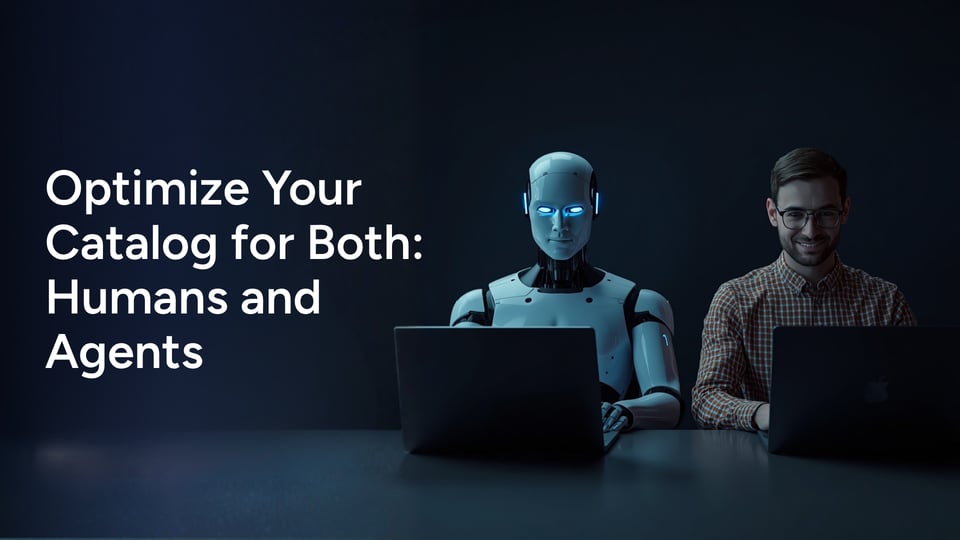

For years, ecommerce teams have treated the product detail page as the center of product discovery - where shoppers land, explore imagery, compare specs, read reviews, and decide whether to buy, but this model is no longer complete.
AI shopping agents don't browse product pages the way people do. They query, retrieve, compare, and filter information from structured data ecosystems. That means your product feed, marketplace catalog, attributes, APIs, schemas, social commerce catalogs, retail media feeds, stock updates, and pricing logic are no longer just operational infrastructure. They're part of the customer experience.
The incomplete model of product optimization
Most brands still treat the PDP as the source of truth for their products. Strong copy, detailed images, accurate pricing, compelling reviews - if those are in place, the product is considered “optimized.”
That works well for human shoppers, but agents do not rely on PDPs as their primary input. They often use structured product data from feeds, catalogs, marketplaces, comparison engines, and commerce platforms to understand what a product is, whether it matches a query, and whether it can be recommended with confidence.
This distinction matters because AI-assisted shopping is moving product discovery upstream. A shopper might ask an agent to compare waterproof jackets under €150, find a MagSafe-compatible iPhone 15 case, or recommend a coffee machine available for delivery this week. In those moments, the agent isn't admiring your PDP. It is looking for structured, reliable, current data it can use to answer the query.
This shift in how AI perceives product information was a recurring theme during the Agentic Commerce webinar we hosted in April:
 Michael Pfeiffer
VP AI & Agentic Commerce at Shopware
And, our research on AI shopping behavior reinforces this shift. More than half of shoppers surveyed have used AI tools to research products, but many still return to marketplaces or brand sites to validate reviews, compare prices, check seller information, and complete the purchase. That makes AI an important discovery layer, while marketplaces and PDPs remain critical trust and conversion layers.
The product has to be understandable before the shopper ever clicks.