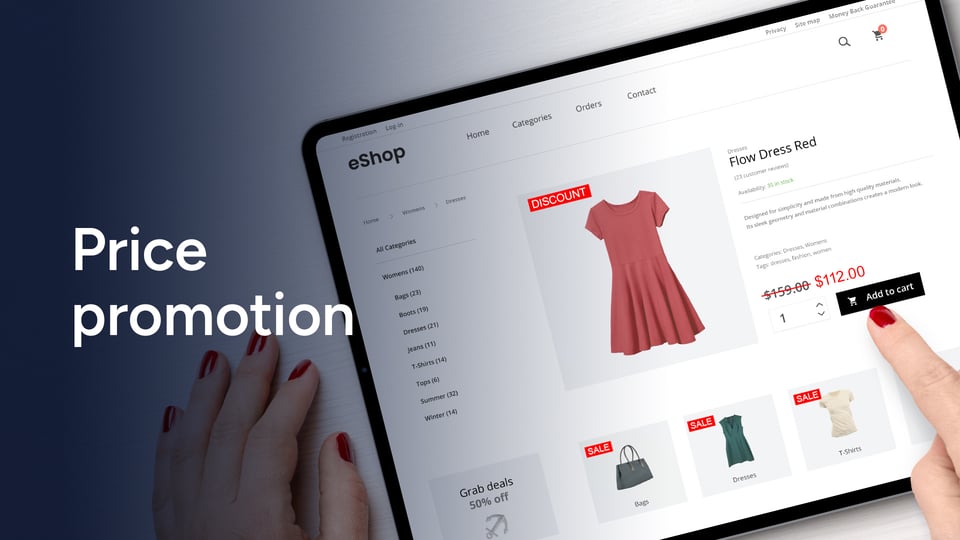
Discounts are one of the most widely used tools in ecommerce. Whether you want to increase sales, clear inventory, or attract new customers, promotional pricing can be extremely effective.
But promotions can also quickly erode your margins if they are not carefully managed. Consumers today compare prices across multiple platforms, marketplace competition is intense, and costs such as commissions, fulfillment, and returns all affect your profitability on marketplaces.
This means brands need to approach promotional pricing strategically. Instead of focusing only on increasing sales volume, successful brands design promotions that also protect margins and contribute to sustainable growth.
In this article, we explore what promotional pricing is, its benefits, and five key tips to ensure your discount strategy remains profitable.
What is promotional pricing?
Promotional pricing is a strategy where a brand temporarily lowers the price of a product or service to attract customers and boost sales. It's often used to quickly increase sales, clear out inventory, launch a new product, or create a sense of urgency.
While promotions can boost sales quickly, they must be carefully calculated. Marketplace fees, fulfillment costs, and return rates all impact whether a discounted sale remains profitable. For this reason, many brands now focus on profit-first promotional pricing, ensuring discounts stay above minimum margin thresholds and align with long-term pricing strategies.
Key promotional pricing advantages
- Encourages faster purchase decisions: Lower prices can persuade hesitant customers to buy and create a sense of urgency, drawing in new customers willing to try the product at a reduced price.
- Maintains competitive edge: Promotional pricing helps a company stand out in a competitive market by retaining existing customers and attracting competitors' customers with better deals.
- Boosts short-term revenue: Discounts increase short-term sales, providing an influx of revenue that can cover immediate expenses or meet annual targets, impressing investors.
- Fosters customer loyalty: Offering affordable products strengthens customer relationships and loyalty, as customers appreciate businesses that respond to their preferences.
- Simplifies marketing efforts: Reduced prices naturally attract customers with minimal marketing effort. Additionally, promotional visitors may purchase other full-priced items, further boosting sales.
How to create an effective promotional pricing strategy?
1. Define your discount strategy
Promotions should always be part of a structured pricing strategy rather than implemented as spontaneous or ad hoc decisions. Additionally, avoid offering discounts too frequently and keep them predictable for customers.
For example, clothing stores typically have sales at the end of each season. Customers are generally aware of this and often wait for these sales to make purchases, which can increase your opportunity costs.
Additionally, consider leveraging data analytics to identify the best times for promotions based on customer behavior and purchasing patterns.
Align your discount strategy with your inventory levels and sales targets to maximize profitability. Offering exclusive discounts to loyal customers or members can also foster brand loyalty and increase repeat purchases.
2. Protect your margins with minimum price thresholds
Before launching any promotion, calculate your minimum profitable price. Your pricing should account for:
- marketplace commissions
- logistics and fulfillment costs
- returns handling
- advertising costs
- cost of goods sold
Marketplace commissions alone can range from 5% to 25% of revenue, depending on the platform. If discounts drop below your minimum price threshold, increased sales volume may actually reduce profitability. Setting clear margin floors ensures promotions stay within safe limits and contribute to overall business performance.
3. Align promotions with your brand positioning
Discounting can affect how customers perceive your brand. For premium or luxury brands, frequent discounts may reduce perceived value and exclusivity.
However, for many brands and retailers, smart discounting can be a powerful tool to boost brand visibility and attract a broader customer base. Strategic discounts can create a sense of urgency and incentivize purchases, making it easier to move inventory and introduce new customers to your products.
For example, many brands or retailers often use discounts to remain competitive and to clear out seasonal stock, thus keeping their offerings fresh and appealing. Smart discounting involves timing and targeting the discounts effectively. For instance, offering discounts during peak shopping seasons or in response to competitive promotions can drive significant traffic and sales.
4. Use data to customize your discount promotions
Promotions should not be identical for every customer. Segment your audience based on:
- purchase history
- browsing behavior
- customer lifetime value
- preferred product categories
Personalized offers increase engagement and avoid frustrating customers who recently purchased the same item at full price. For example:
- recommend complementary products
- offer discounts on previously viewed items
- send targeted promotions to loyal customers
- Data-driven promotions improve both conversion rates and customer satisfaction.
5. Combine promotions with smarter pricing tactics
Discounting is not the only way to improve sales performance. In many cases, smarter pricing strategies can deliver better results without heavily reducing prices.
Examples include:
-
Product bundles: Bundling multiple products together increases average order value while spreading shipping costs across more items.
-
Dynamic pricing: Adjust prices automatically based on market conditions, competitor activity, and demand.
-
Marketplace-specific pricing: Each marketplace has different cost structures and competitive environments, so prices should be optimized per channel.
These strategies allow brands to remain competitive without sacrificing profitability.
Want practical tools to calculate marketplace profitability?
Download our Profit-First Marketplace Toolkit. It includes:
- A step-by-step guide to building profitable marketplace growth
- A ready-to-use P&L template to calculate true contribution margin per SKU and marketplace
No forms required. Instant access.
Things to keep in mind while using promotional pricing
Promotions can deliver strong results when executed strategically, but they also come with risks. Some key considerations include:
- Complex Calculations: Regular prices help companies stick to budgets and match customer spending. Discounts require careful calculation of profit margins and target audiences, and offer durations to maintain profitability.
- Changed Price Expectations: Customers might delay repeat purchases, waiting for sales. Highlighting product value and running frequent promotions can keep sales steady.
- Perceived Quality Issues: Discounted products may be seen as lower quality. Marketing should emphasize that high-quality products are offered at competitive prices.
- Limited Options: Promotions often apply to specific products, limiting customer choices. Offering promotions on a variety of products or running single-product promotions throughout the year can address this.
Strategic discounting for sustained success with ChannelEngine
Discounts can drive sales, but they must be implemented strategically. Start with a clear discount strategy and avoid running promotions too frequently, as predictable sales may encourage customers to delay purchases. At the same time, closely monitor your margins. Higher sales volumes do not always translate into higher profits, so every promotion should align with your brand positioning and long-term profitability goals.
Understanding your customers is also key. Analyze where they are in the buying journey and tailor promotions accordingly. Avoid offering discounts shortly after a purchase, as this can frustrate customers who paid full price. Instead, focus on rewarding loyal customers with exclusive offers that strengthen relationships and encourage repeat purchases.
With ChannelEngine, managing promotional pricing becomes far easier. Our price management solution enables you to apply discounts across entire marketplaces or target specific products, categories, or brands. Whether you prefer fixed discounts or percentage-based reductions, you can configure pricing strategies that support your sales and margin goals.
Our dynamic repricer also helps you stay competitive in real time. It automatically adjusts your prices based on market conditions while respecting your minimum price thresholds. This allows you to compete for the Buy Box more effectively while safeguarding your margins.
Book a discovery call with one of our experts today!