ChannelEngine vs. Channable
Channable focuses on feed optimization, catalog quality, and advertising campaign management.
But when you need to manage orders, inventory, pricing, and returns across multiple marketplaces, the limitations of a feed-based setup become obvious.
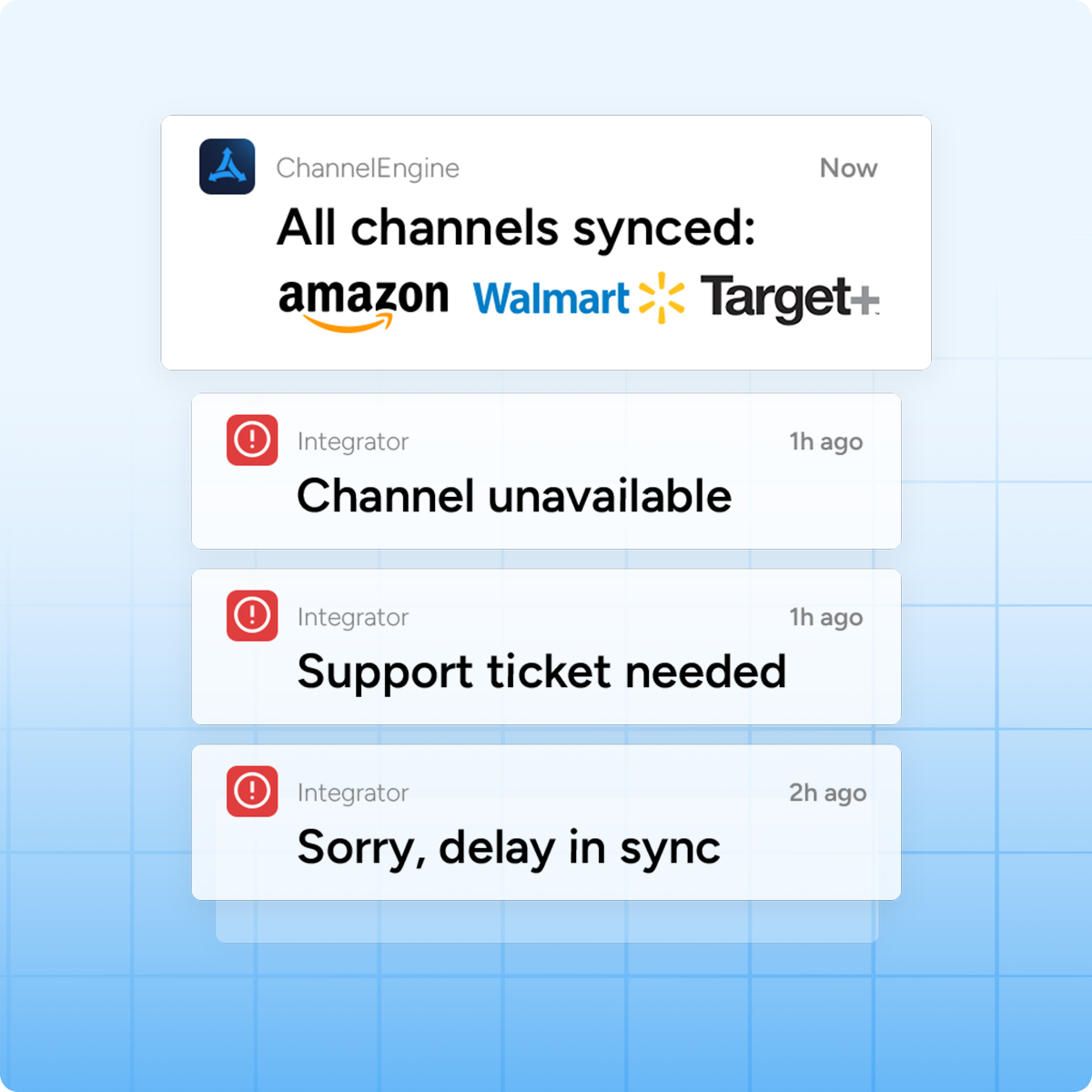
This is where ChannelEngine comes in. As a multichannel integration and management platform, ChannelEngine connects your products, stock, pricing, and orders directly to marketplaces through real-time API integrations.
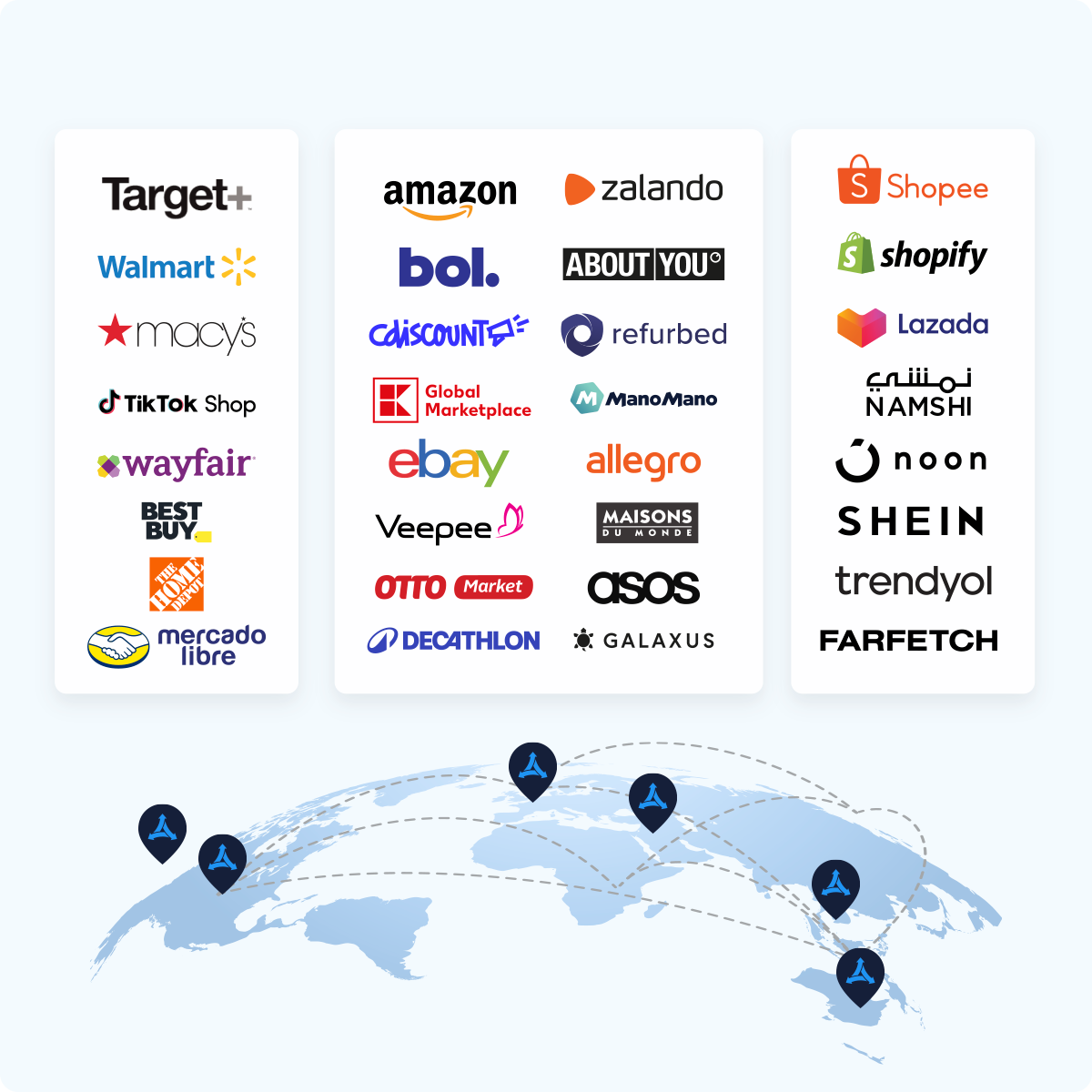
You get automated operations, full control of your multichannel workflows, and access to 1300+ global sales channels, without hidden costs or integration limits.
Why brands eventually outgrow Channable and how it could be costing you growth
Many companies choose Channable as a starting point because it helps improve product feeds for ads and comparison sites. For early-stage needs, especially around PPC and comparison channels, it performs well.
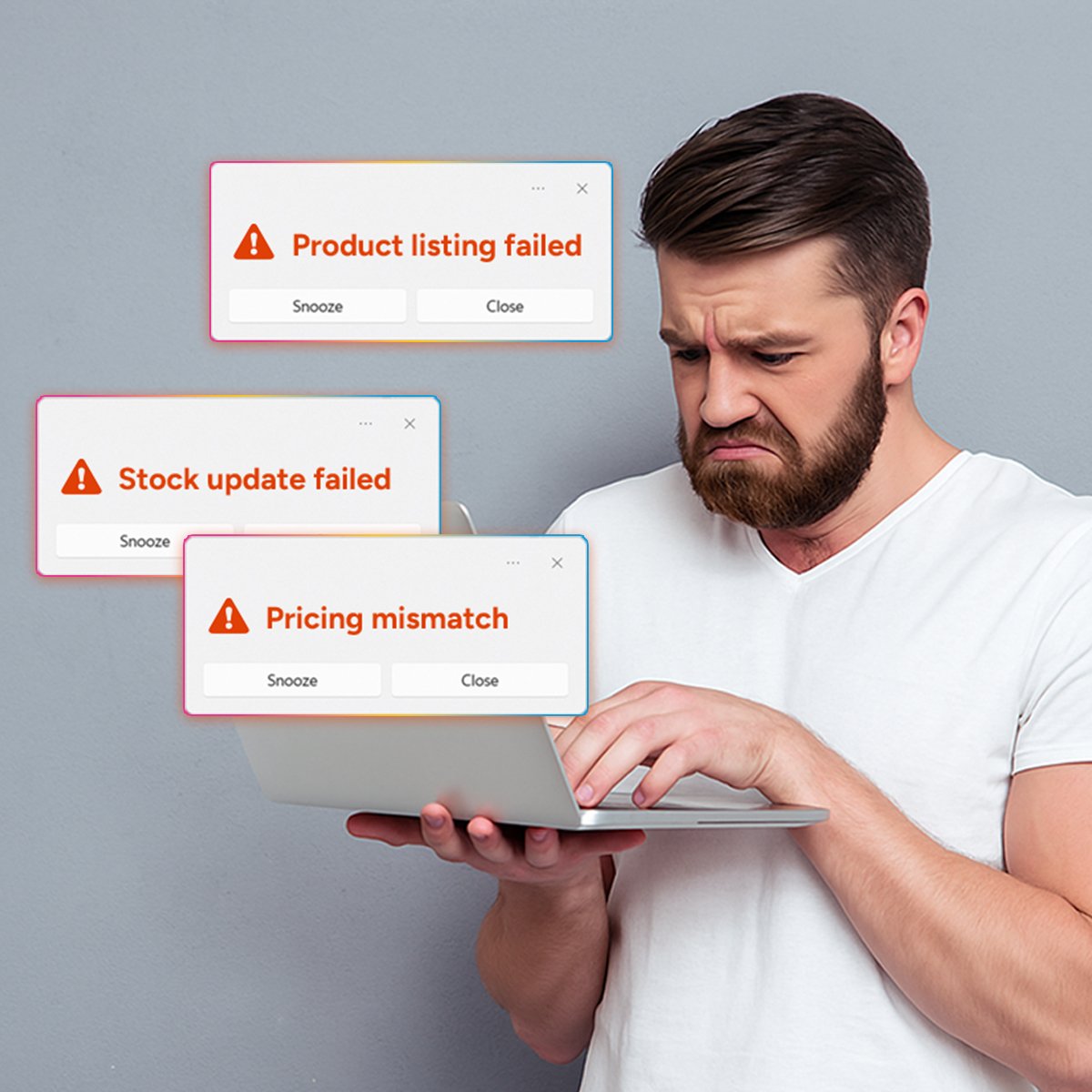
But as soon as you begin selling across multiple marketplaces, the limits of a feed-based setup start to show. While Channable now positions itself as a multichannel platform, feeds and ads remain at the heart of their offering. Their marketplace module is an add-on rather than a core system, which means slower updates, limited automation, and more manual work as your catalog, order volume, and channel count grow.
If you're outgrowing Channable, ChannelEngine can be the perfect alternative for you: automate pricing, sync orders and inventory, manage returns, and expand to new marketplaces, all from one platform built for multichannel growth.
In short:
Channable helps manage feeds.
ChannelEngine helps you run a multi-channel ecommerce business.
Common frustrations from Channable users
❌ Marketplace coverage is limited to ~90 channels, mostly in Europe
❌ Manual project setup required for each marketplace
❌ Feed-based connections slow down updates and limit flexibility
❌ Order connections prone to rate-limit issues during volume peaks
❌ Reactive support with slow responses and limited hours
These aren't minor inconveniences. They affect revenue, operations, and scalability.
And there is a clear reason behind most of these challenges. Channable is built on feed-based technology, while ChannelEngine uses real-time API marketplace integrations.
Feeds send data at set intervals, which leads to delays in pricing, stock, orders, and error handling. API integrations keep everything in sync in real time, which is critical when marketplace performance depends on speed and accuracy.
When expanding across multiple marketplaces, feed-based setups quickly become a bottleneck rather than a foundation for scalable growth.
Why ecommerce leaders choose ChannelEngine
See ChannelEngine's listing platform in action
Take a quick interactive tour to discover how to sync, optimize, and scale across every marketplace.
We make the migration process smooth
Switching from Channable is fast and risk-free. Your ecommerce operations stay live while we migrate your data, map your channels, and integrate your systems, guided by our migration experts.
"The onboarding experience was exceptional - fast, smooth, and professional. Not only did we migrate marketplaces quickly, but we also onboarded new ones, enabling us to scale while continuing to sell."
– Kim Møller-Nielsen, CEO Crazy Safety
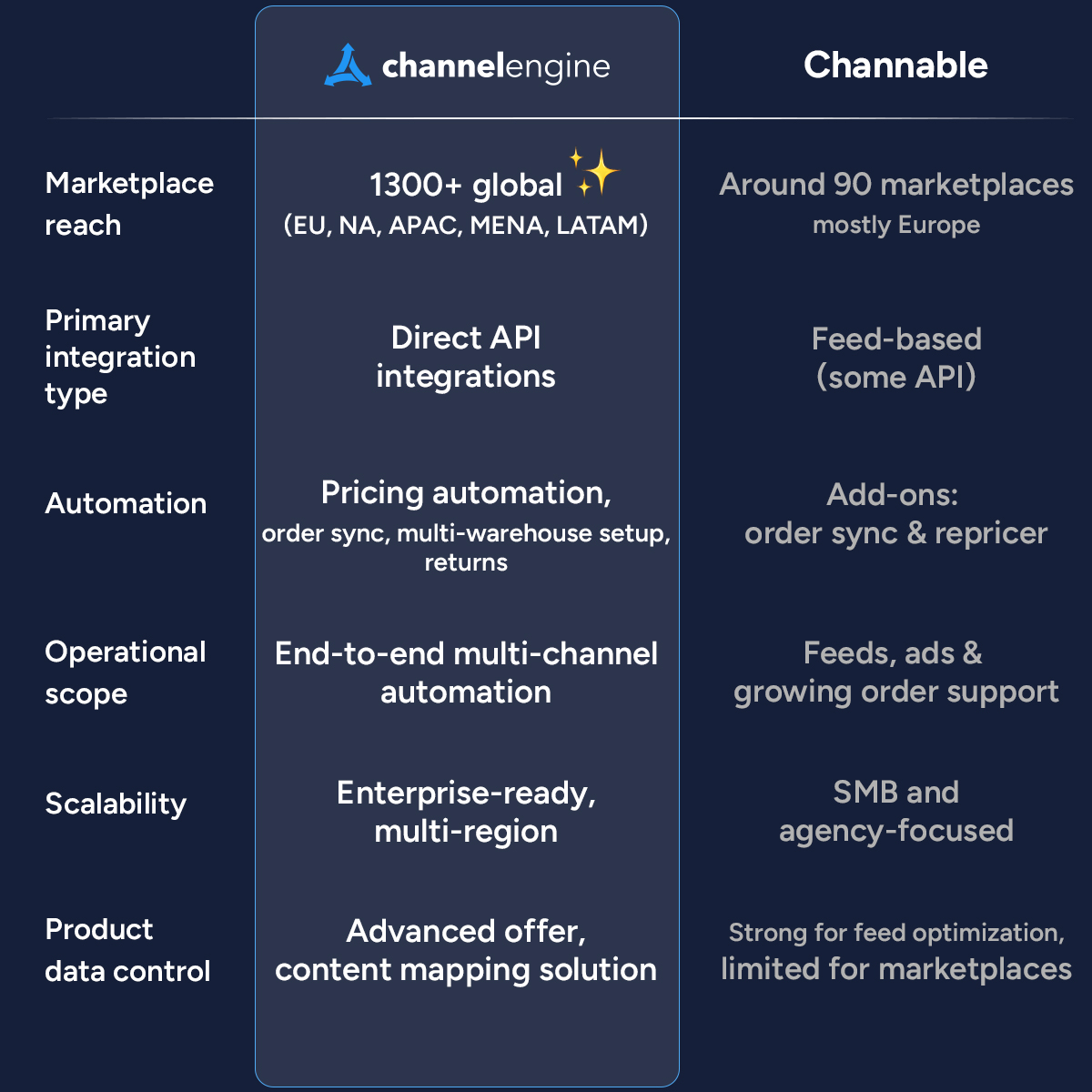
A quick comparison
| Feature | ChannelEngine | Channable |
|---|---|---|
| Marketplace coverage | 1300+ global (Europe, North America, APAC, MENA, LATAM) |
Around 90 marketplaces, mostly in Europe |
| Integration type | Direct API integrations | Feed-based setup |
| Automation | Built-in pricing automation, order sync, multi-warehouse setup, returns |
Add-ons per channel |
| Operational scope | End-to-end multi-channel automation | Feeds and ads, limited operations |
| Scalability | Enterprise-ready, multi-region | SMB and agency-focused |
| Product data control | Advanced offer and content mapping solution | Strong for feed optimization but limited for marketplaces |
| Reliability | Built for high-volume order flows | Rate-limit issues at scale |
Frequently asked questions
-
When do I need ChannelEngine if I already use Channable?
You typically need ChannelEngine once marketplace volume ...
You typically need ChannelEngine once marketplace volume increases and manual or feed-based management starts to break down. Common signs include stock mismatches, manual order handling, limited pricing control, or growing effort to keep multiple channels aligned
-
Do I need to replace Channable to use ChannelEngine?
No. Some customers continue using Channable for PPC and ...
No. Some customers continue using Channable for PPC and feed-based advertising while relying on ChannelEngine to manage marketplace operations. Both tools can be used side by side, each focused on what it does best.
-
How is ChannelEngine different from feed-based marketplace tools?
Feed-based tools focus primarily on pushing product data to ...
Feed-based tools focus primarily on pushing product data to marketplaces. ChannelEngine also handles product data distribution, but goes further by managing what happens after products are live, including real-time stock and order syncing, pricing automation, returns, settlements, and handling marketplace-specific rules at scale.
-
What happens when marketplaces change requirements or APIs?
ChannelEngine continuously maintains marketplace ...
ChannelEngine continuously maintains marketplace integrations and adapts to changes in APIs, policies, and requirements. This removes the operational burden from your team and helps keep marketplace connections stable as marketplaces evolve.
-
Can my existing Channable feed logic be reused?
Your existing product structure, logic, and mappings can ...
Your existing product structure, logic, and mappings can largely be translated into ChannelEngine’s content and offer setup. Our onboarding team supports this process to reduce manual work and shorten time to value.
-
What happens if we need help after onboarding?
You get access to dedicated support with clear SLAs and ...
You get access to dedicated support with clear SLAs and strong marketplace expertise. Support focuses on continuity and optimization, helping keep your marketplace operations stable as you grow.